
Key takeaways
- Delay sprays work on sensory nerve endings, not vascular blood flow. Topical lidocaine dampens superficial signal transmission on the glans and frenulum so you can pace arousal without interfering with erectile mechanisms.
- They do not cure premature ejaculation. Sprays provide temporary on-demand desensitization; they do not permanently alter ejaculation latency or resolve underlying psychological or hormonal drivers.
- Timing and wiping are the two non-negotiable rules. You must wait 10 to 15 minutes for complete absorption and wipe away surface residue with a damp cloth to prevent transferring numbness to your partner.
- Dosage titration prevents numbness and erectile softening. Starting with one to three metered sprays allows you to find your balance between enhanced control and retained pleasure.
- Behavioral techniques and physical therapy have robust evidence. Methods like the start-stop protocol, the squeeze technique, and pelvic floor muscle training produce durable, long-term improvements in control.
- Consult a doctor if rapid ejaculation is sudden, accompanied by pain, or unmanaged by conservative methods. Premature ejaculation can stem from prostatitis, thyroid dysfunction, or co-occurring erectile difficulties.
Premature ejaculation is the most common sexual concern reported by men, yet the conversation around it is frequently crowded with exaggerated claims, dubious herbal blends, and awkward embarrassment. The physiological reality is straightforward: rapid climax is often driven by a combination of heightened glans sensitivity, sympathetic nervous arousal, and learned behavioral conditioning. Topical delay sprays offer a proven, targeted way to modulate sensory feedback in real time. Here is the science behind how lidocaine sprays work, how to use them without numbing your partner, and which behavioral strategies offer the most durable clinical results.
How do delay sprays actually work?
By temporarily blocking voltage-gated sodium channels in sensory nerve endings. Topical anesthetics like lidocaine penetrate the thin mucosal epithelium of the glans and frenulum, decreasing the rate of action potential conduction along dorsal penile nerves. This raises the sensory threshold required to trigger the ejaculatory reflex without eliminating physical sensation or interfering with erectile hardness.
The human penis is densely innervated, particularly across the coronal ridge and the frenulum on the underside of the shaft. During penetrative intimacy, mechanical friction continuously stimulates these superficial nerve receptors, transmitting signals along the pudendal nerve to the spinal cord's ejaculatory reflex center. In men experiencing rapid climax, this feedback loop can reach the ejaculatory threshold very quickly. Clinical overviews from the MedlinePlus medical encyclopedia on premature ejaculation emphasize that sensory hypersensitivity frequently interacts with autonomic arousal to shorten latency.
When you apply a metered topical anesthetic spray, the active compound diffuses through the cellular layers of the glans mucosa. By stabilizing the neuronal membrane, it prevents the rapid influx of sodium ions necessary for nerve firing. The result is not total numbness, but a measurable dampening of peak tactile intensity. You still perceive pressure, warmth, and motion, but the sharp spikes of friction that accelerate climax are softened, giving you the time and cognitive space to regulate your physical response.
Importantly, delay sprays operate strictly on peripheral sensory nerves. They do not dilate arteries, constrict veins, or alter hormonal pathways. For understanding how mechanical tools address the vascular side of performance, see our comprehensive guide on cock rings and venous constriction safety, as well as our review of how vacuum erection devices function.
How do you use a delay spray without numbing your partner?
By respecting the mandatory absorption window and removing surface residue before intimacy. Apply one to three sprays specifically to the glans and frenulum, allow 10 to 15 minutes for the anesthetic to absorb beneath the skin, and then thoroughly wipe or wash the penis with a damp towel. A clean barrier condom adds complete protection against partner desensitization.
The single most common complaint regarding delay sprays is accidental transfer of numbness to a partner's vaginal walls, anal canal, or mouth. Because mucosal tissue in both male and female anatomy absorbs local anesthetics rapidly, unabsorbed spray left on the surface of the shaft will immediately desensitize whatever tissue it touches. This can ruin pleasure for both individuals and can lead to frustration.
Preventing partner transfer comes down to understanding pharmacokinetics: the active drug requires approximately 10 to 15 minutes to migrate into the epidermal nerve endings. Once it has penetrated below the surface, the drug that remains on the skin's exterior is redundant. Wiping down the shaft with a warm, damp cloth or rinsing under the tap removes this surplus layer completely without washing away the anesthetic that has already bound to deeper nerve receptors.
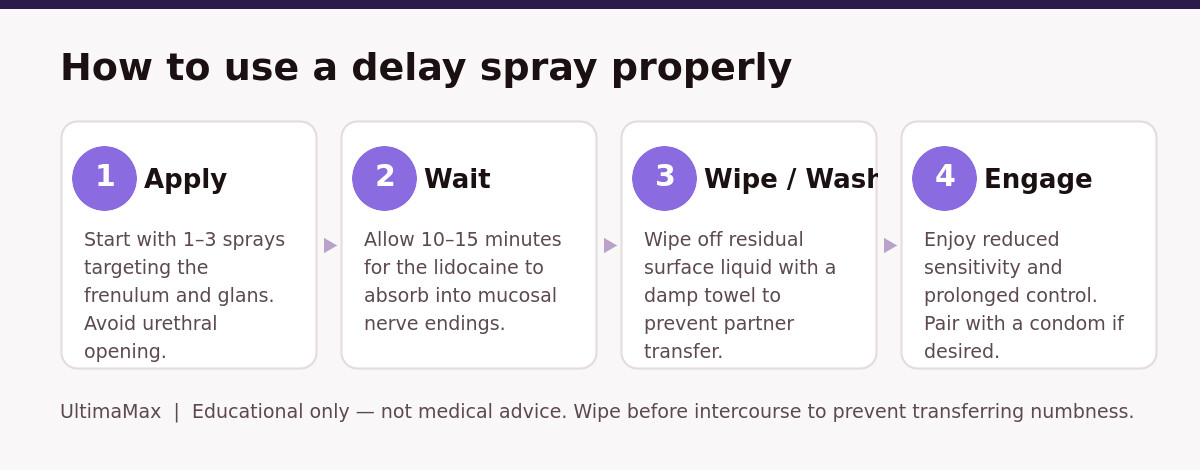
Step-by-step application protocol
- Target the high-sensitivity zones: Direct the metered pump toward the glans (head) and the frenulum. Avoid the urethral opening (the urinary meatus), as spraying directly into the urethra can cause temporary stinging or burning.
- Start with the lowest dose: Begin with one or two sprays on your first attempt. You can titrate up to three sprays in future sessions if necessary, but never exceed the manufacturer's stated ceiling.
- Rub it in gently: Use a clean fingertip to spread the liquid evenly across the mucosal skin. Wash your hands with soap immediately afterward so you do not transfer numbing agent to your eyes or face.
- Wait 10 to 15 minutes: Set a timer. Do not rush into penetrative intimacy during this absorption window.
- Wipe or wash thoroughly: Use a damp washcloth or rinse under water to remove any residual liquid from the surface of the skin.
- Proceed with confidence: Engage in intimacy with reduced sensory overwhelm. If you plan to engage in oral sex, a thorough wash with soap and water is mandatory to avoid numbing your partner's mouth.
What is the difference between lidocaine and benzocaine?
Lidocaine is an amide-class local anesthetic with rapid mucosal absorption and predictable depth of penetration, making it ideal for metered liquid sprays. Benzocaine is an ester-class anesthetic commonly formulated in thicker creams, gels, and desensitizing condoms, providing slower onset and shallower surface numbing.
When selecting a desensitizing product, you will encounter two primary active ingredients. Both are local anesthetics recognized under the over-the-counter monograph framework for male genital desensitizers, but their chemical structures and delivery formats dictate how they perform in practice.
Lidocaine (typically formulated between 7.5% and 10% in liquid solutions) dissolves readily in alcohol or water-based carriers. This allows it to atomize into a fine mist through a metered pump dispenser. Each pump delivers a precise dose (for instance, approximately 10 mg of lidocaine per spray in standardized formulations). Liquid sprays dry and absorb faster than greasy ointments, leaving virtually no film once wiped down.
Benzocaine (commonly 4% to 7.5%) is less water-soluble and is generally suspended in oily creams or placed inside the tip of specialized delay condoms. While effective, thick creams are harder to dose accurately, take longer to wash off, and can leave a slippery residue that might degrade silicone toys or interfere with condom adhesion if smeared outside the sheath.
| Format | Primary active | Onset & absorption | Key advantages | The trade-off |
|---|---|---|---|---|
| Metered Delay Spray | Lidocaine (7.5%–10%) | Fast (10–15 mins) | Precise dosing per pump; quick mucosal uptake; easy to wipe clean | Can sting if sprayed directly into urethral opening |
| Desensitizing Cream / Gel | Benzocaine or Lidocaine | Moderate (15–20 mins) | Stays in place during application; thick barrier feel | Harder to measure precise dosage; greasy residue needs thorough washing |
| Delay Condoms | Benzocaine (4%–5% internal) | Immediate upon wear | Built-in barrier eliminates partner transfer risk entirely | Fixed dose; less flexibility if sensation is reduced too much |
| Behavioral Conditioning | Non-pharmacological | Learned over weeks | Permanent skill development; zero chemical side effects; builds intimacy | Requires patience, consistent practice, and partner communication |
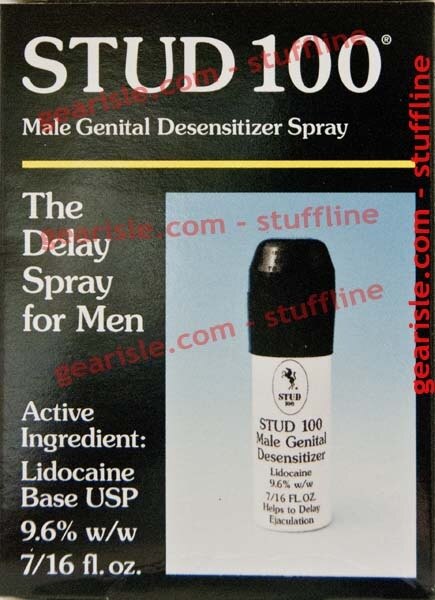
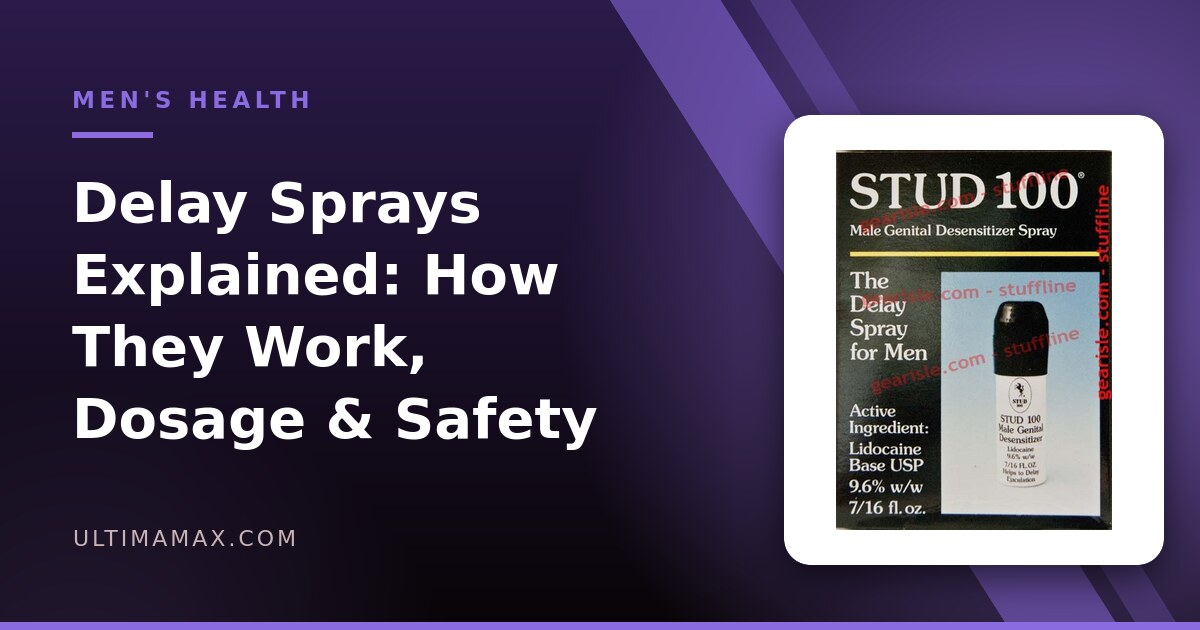
Stud 100 Delay Spray Genital Desensitizer
One of the most established topical desensitizers worldwide. Formulated with 9.6% Lidocaine Base USP (approx. 10 mg per metered spray pump) in a discreet 7/16 fl oz container delivering over 120 metered sprays. Conforms to topical desensitizer monograph standards for temporary reduction of penile sensitivity.
View product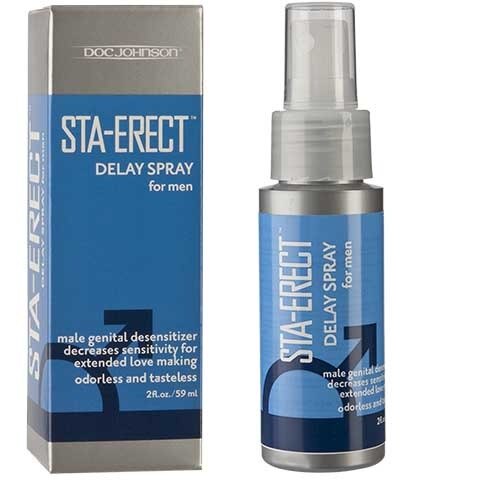
Doc Johnson Sta-Erect Delay Spray (7.5% Lidocaine)
A gentle 2 oz topical desensitizing spray by Doc Johnson featuring 7.5% lidocaine. Designed for straightforward pump application to help pace intimate sessions and manage over-rapid arousal.
View productYou can explore our full selection of topical solutions in the delay products and men's sprays categories within the wider men's gear catalog.
What behavioral techniques have real clinical evidence?
The start-stop technique, the squeeze method, and targeted pelvic floor physical therapy. These evidence-backed non-pharmacological approaches retrain the autonomic ejaculatory reflex, improve sensory threshold awareness, and strengthen voluntary pelvic muscle control for durable long-term pacing.
While topical sprays offer immediate, on-demand sensory modulation, they are most powerful when combined with behavioral conditioning. Clinical reviews and urological guidance referenced in MedlinePlus on premature ejaculation management emphasize that behavioral psychotherapy, somatic techniques, and physical exercises produce meaningful, lasting improvements in ejaculatory latency time.
1. The Start-Stop Technique (Semans Protocol)
Originally developed by urologist James Semans in 1956, this protocol focuses on identifying the point of ejaculatory inevitability — the physiological "point of no return" where emission becomes involuntary. During solo masturbation or partnered stimulation, you bring arousal up to approximately a 7 or 8 on a 10-point scale, immediately cease all physical movement, and allow arousal to subside to a 3 or 4 before resuming. Repeating this cycle three to four times before climaxing gradually recalibrates neuromuscular tolerance to high-arousal states.
2. The Squeeze Technique (Masters and Johnson)
Pioneered by sexologists William Masters and Virginia Johnson, the squeeze technique adds active somatic pressure to interruption. When approaching the threshold of climax, you or your partner apply firm, steady pressure with thumb and index finger around the coronal ridge at the base of the glans for 10 to 20 seconds. This localized compression reduces venous congestion, curbs the urge to ejaculate, and allows prolonged intercourse once stimulation restarts.
3. Pelvic Floor Muscle Training (Kegels and Downtraining)
The bulbocavernosus and ischiocavernosus muscles play a central role in the rhythmic contractions of ejaculation. Systematic reviews published across andrology journals, including epidemiological research detailed in Translational Andrology and Urology, highlight that men with lifelong rapid climax often exhibit chronic hypertonicity or weak voluntary control of their pelvic floor. Working with a pelvic floor physical therapist to alternate between contracting (Kegel) and fully relaxing (reverse Kegel) these muscles enables conscious regulation during high excitement.
What are the safety limits and who should not use them?
Never apply delay sprays to broken skin, irritated tissue, or active lesions. Anyone with a known allergy to lidocaine or amide local anesthetics must avoid them. If your partner is pregnant, delay sprays should not be used without a protective barrier condom, and sprays must always be washed off before oral intimacy.
Topical lidocaine has an excellent clinical safety profile when used according to instructions, but misuse can lead to avoidable complications. The most frequent error is applying too much spray in an attempt to guarantee extreme duration. Excess lidocaine can cause total penile numbness, leading to a loss of erection because the brain relies partly on tactile feedback to sustain erectile rigidity. If softening occurs, simply wash the area with warm soap and water and allow 45 to 60 minutes for the anesthetic effect to wear off.
Safety guidelines: Perform a small patch test on your inner forearm before first genital use to rule out allergic contact dermatitis. Do not exceed 10 metered sprays in a single 24-hour period. Avoid getting spray in your eyes, nose, or mouth. If you or your partner develop a skin rash, persistent redness, burning, or swelling, discontinue use immediately and seek medical advice.
When to see a clinician
Rapid climax is categorized clinically into two primary types: lifelong (primary) premature ejaculation, which has occurred since early sexual encounters, and acquired (secondary) premature ejaculation, which develops suddenly after previously normal function. If rapid ejaculation is new, sudden, or accompanied by pelvic discomfort, painful urination, or testicular ache, it warrants prompt urological evaluation.
Underlying conditions that can trigger acquired rapid climax include chronic prostatitis (inflammation of the prostate), urinary tract infections, hyperthyroidism, and hormonal fluctuations. Furthermore, premature ejaculation frequently co-occurs with erectile dysfunction (ED). When maintaining an erection is difficult, men often unconsciously rush intercourse before the erection softens, creating a secondary pattern of rapid climax. As outlined by the NIDDK urologic disease guidelines, treating co-existing vascular or erectile issues often naturally resolves latency concerns.
Comprehensive evaluations from the Cleveland Clinic's clinical department on premature ejaculation highlight that modern urologists offer multi-modal treatments, including pelvic therapy, topical anesthetics, and prescription therapies when conservative measures are insufficient.
Frequently asked questions
How does a delay spray actually work?
Delay sprays contain mild topical anesthetics such as lidocaine that temporarily block sodium channels in superficial nerve endings across the glans and frenulum. This dampens hypersensitivity during physical friction while preserving central arousal and erectile function.
Will a delay spray numb my partner during sex?
Not if you use it correctly. You must allow 10 to 15 minutes for the anesthetic to absorb into mucosal nerve endings, and then wipe or wash the shaft and glans with a damp cloth before penetration. Using a condom provides complete barrier protection against partner transfer.
How many sprays should I use for the first time?
Start with one to three metered sprays applied directly to the glans and the underside of the shaft (the frenulum). Never exceed the manufacturer's stated maximum (typically 5 to 10 sprays), as overspraying can cause temporary numbness and loss of erection.
Can you receive oral sex after using a delay spray?
Only if you thoroughly wash the penis with soap and water after the 10-to-15-minute absorption window. Unwashed delay spray will numb your partner's mouth, lips, and tongue immediately upon contact.
Do delay sprays provide a permanent cure for premature ejaculation?
No. Delay sprays offer temporary, on-demand symptomatic relief by modulating sensory input. They do not permanently alter ejaculation latency or resolve underlying causes such as performance anxiety, endocrine imbalances, or prostatitis.
Can I use a delay spray together with a cock ring or condom?
Yes. Delay sprays are compatible with standard latex and polyurethane condoms, as well as elastomeric constriction rings. Always ensure the spray is absorbed and wiped clean before putting on a condom to prevent slip.
Who should avoid using a delay spray?
Avoid delay sprays if you or your partner have an allergy to lidocaine or local anesthetics, on broken, irritated, or inflamed skin, or if your partner is pregnant unless using a reliable barrier condom.
Sources and further reading
- MedlinePlus Medical Encyclopedia — Premature Ejaculation Overview
- National Institute of Diabetes and Digestive and Kidney Diseases (NIDDK) — Erectile Dysfunction & Urologic Health
- Translational Andrology and Urology — The Epidemiology and Management of Premature Ejaculation
- Cleveland Clinic — Premature Ejaculation: Causes, Diagnosis, and Treatment Options
- Centers for Disease Control and Prevention (CDC) — Condom Effectiveness and Use
Medical disclaimer. This article is educational and does not constitute medical advice. It is not intended to diagnose, treat, cure, or prevent any health condition or disease. Topical genital desensitizers are intended for temporary reduction of penile sensitivity to help delay rapid ejaculation. If you suspect your symptoms stem from an underlying medical condition, infection, or medication side effect, or if you experience persistent pain or discomfort, consult a qualified healthcare provider. Do not use desensitizing products if you or your partner have a history of allergies to local anesthetics.