
Key takeaways
- Vaginal dryness is not only a menopause symptom. Hormonal contraception, breastfeeding, antihistamines, some antidepressants, cancer treatment, stress and simply not being aroused yet all produce it.
- Lubricants and moisturisers are different products. A lubricant is used at the time to reduce friction. A moisturiser is used regularly, whether or not you are having sex, to improve the tissue itself.
- "Moisturiser" on a label does not make it one. Read the directions — if they say to apply as needed for intimate activity, it is a lubricant regardless of the name.
- Not enough arousal time is the most common cause of all, and it is not a medical problem. Lubrication follows arousal, and it lags behind desire by longer than most people expect.
- "Glycerin-free" is not the same as gentle. Propylene glycol is the usual substitute and carries similar osmolality considerations.
- Persistent dryness with burning, itching or pain deserves a diagnosis, not a better lubricant — vaginal oestrogen is prescription-only and highly effective when it is the right answer.
Search for vaginal dryness and almost everything you find assumes you are menopausal. That leaves a lot of people wondering what is wrong with them — women in their twenties on the pill, new mothers who are breastfeeding, anyone on antihistamines through allergy season, people mid-chemotherapy, and anyone whose partner treats foreplay as a formality. The tissue behaves the same way whatever the reason. What differs is the cause, and the cause is what decides whether the right answer is a bottle, a routine or a prescription.
What causes vaginal dryness if it is not menopause?
Anything that lowers oestrogen activity or dries mucous membranes generally. The common non-menopausal causes are hormonal contraception, breastfeeding, antihistamines and decongestants, some antidepressants, cancer treatment, autoimmune conditions such as Sjögren's, smoking, and — most often of all — not enough time spent aroused before penetration.
MedlinePlus lists a similar spread: hormonal change, certain medicines, douching and irritants, and anxiety or insufficient foreplay. The reason so many different things converge on the same symptom is that vaginal lubrication is a filtration process driven by blood flow to the tissue and supported by oestrogen. Reduce either the blood flow or the hormone, and output falls.
| Cause | What is going on | What usually helps |
|---|---|---|
| Hormonal contraception | Some combined pills lower free testosterone and can thin the tissue in susceptible users | Lubricant short term; discuss a different formulation if it persists |
| Breastfeeding | Prolactin is high and oestrogen is low — a normal, temporary state | A good lubricant, and patience; it resolves as feeding reduces |
| Antihistamines / decongestants | They dry every mucous membrane, not just your nose | Lubricant during use; the effect stops when the course does |
| SSRIs and some antidepressants | Reduced arousal response as well as reduced lubrication | Worth raising with the prescriber — dose and drug choice both matter |
| Cancer treatment | Chemotherapy and pelvic radiotherapy can affect ovarian function directly | Ask your team; hormone-free moisturisers are often recommended first |
| Sjögren's and autoimmune conditions | Systemic dryness affecting eyes, mouth and vagina together | Needs a diagnosis rather than a product |
| Not enough arousal time | Lubrication lags arousal — it is a consequence, not a starting condition | More time. This is the most common cause and the easiest to fix |
| Soaps, douches, scented products | Stripping the natural environment and irritating the tissue | Stop using them; water is enough externally |
What is the difference between a lubricant and a moisturiser?
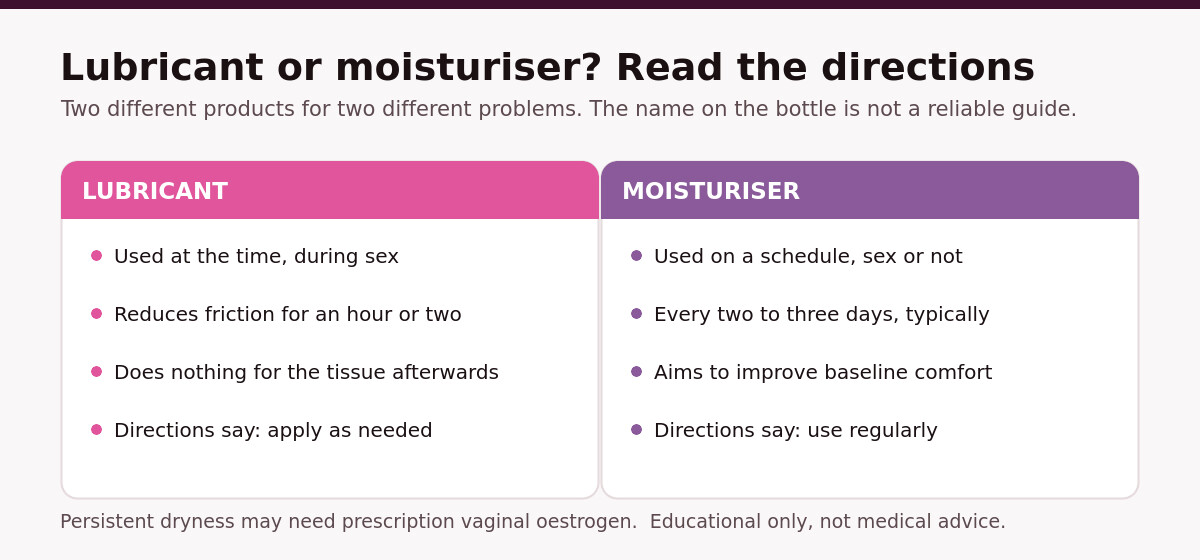
Timing and purpose. A lubricant is applied at the time and reduces friction for the next hour or two — it does nothing for the tissue afterwards. A vaginal moisturiser is applied on a schedule, typically every two or three days regardless of sexual activity, and works by helping the tissue hold water so that baseline comfort improves.
The clinical literature treats them as separate interventions. A review of lubricant and moisturiser composition in genitourinary syndrome of menopause describes lubricants as short-term relief used with sexual activity and moisturisers as day-to-day products intended to give longer-lasting benefit. MedlinePlus makes the same split, noting that a lubricant moistens for a few hours while a moisturising cream can last around a day.
Here is where shopping gets confusing. A great many products marketed as "personal moisturiser" are, by their own directions, lubricants. The test is simple and takes ten seconds: read the directions rather than the name. If it says to apply the desired amount before or during intimate activity and reapply as often as you like, that is a lubricant. If it says to use it every few days on a schedule, it is a moisturiser.
A worked example from our own shelf
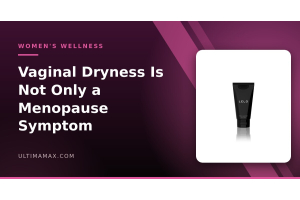
Take the LELO Personal Moisturizer we stock. The name says moisturiser; the directions say to apply to the external genital area and reapply as often as desired, and it is labelled for external use only. That is a lubricant — a nicely made, long-lasting, paraben-free and glycerin-free one, but a lubricant. It is an excellent product for friction during sex and it is not the product for improving baseline tissue comfort between times.
Its ingredient list also makes a useful teaching point about the "free-from" claims that dominate this category. It is genuinely glycerin-free, which many people specifically look for. The second ingredient is propylene glycol — the most common substitute, and another humectant with its own osmolality implications. The WHO advisory note on lubricants is concerned with total osmolality rather than with glycerin specifically, so removing one humectant and adding another does not automatically produce a gentler product. Our guide to choosing a personal lubricant goes through what the numbers mean.
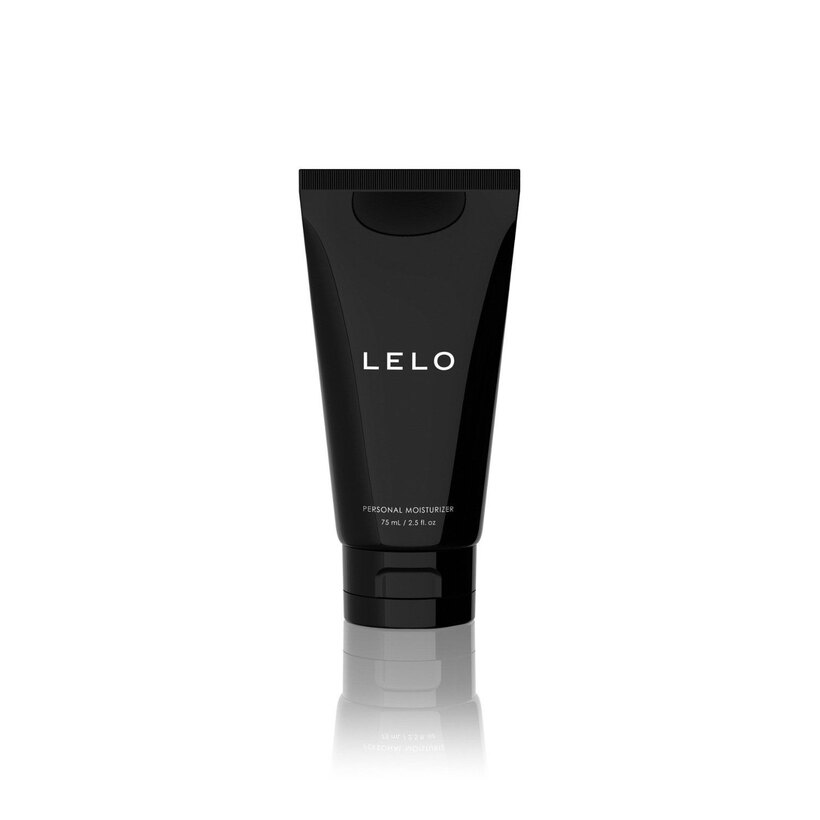
LELO Personal Moisturizer, Water-Based, 2.5 oz
Long-lasting water-based formula with aloe vera, paraben-free, glycerin-free and fragrance-free. Non-greasy, non-staining, latex-safe and compatible with silicone toys. Labelled for external use; apply as needed rather than on a schedule.
View productCompare the rest of the water-based range, or browse women's products more broadly.
Why does arousal time matter so much?
Because lubrication is downstream of blood flow, and blood flow takes time. Desire can arrive in seconds; the vascular response that produces lubrication does not. Research on arousal consistently finds a lag between feeling interested and the body responding, and that the two do not always track each other closely at all.
This matters because it is the one cause on the list that gets misdiagnosed as a medical problem. Someone who is dry after two minutes of foreplay and comfortable after twenty does not have a dryness disorder — they have an ordinary body being asked to work faster than it does. It is worth knowing before you start buying products, and it is worth saying out loud to a partner, which is often the harder part.
The related idea is that arousal and desire are separate systems that can disagree, which we covered in more depth in our article on what really drives female desire. Physical response is not a reliable readout of interest, in either direction.
Things that make dryness worse and are worth stopping: douching, scented soaps, bubble baths and washes used internally, "feminine hygiene" sprays and wipes, and oil-based products with latex condoms. The vagina does not need cleaning internally — water externally is sufficient, and stripping the natural environment tends to produce exactly the irritation people are trying to wash away.
What actually treats it?
It depends on whether the cause is temporary or hormonal. Temporary causes — antihistamines, a stressful month, not enough arousal time — need a lubricant and the cause addressed. Persistent, tissue-level dryness responds best to a regular moisturiser, and where oestrogen deficiency is the driver, low-dose vaginal oestrogen is markedly more effective than anything sold over the counter.
The stepwise approach most clinicians use runs roughly like this:
- Remove the irritants. Stop douching and scented products first — sometimes that is the whole problem.
- Add time. Free, effective, and the most commonly missed step.
- Use a good lubricant during sex. A water-based one with a short ingredient list, or silicone if you want longer-lasting glide and are not using silicone toys.
- Add a proper vaginal moisturiser on a regular schedule if dryness is present outside of sex too.
- Ask about vaginal oestrogen if symptoms persist. It is prescription-only, applied locally in low doses, and the ACOG discussion of vaginal dryness covers where it fits.
On the product side, the evidence is real but modest, and worth describing honestly. A systematic review of lubricants for sexual health found they reliably improve comfort and pleasure, while also noting that some high-osmolality, low-pH formulations can irritate genital tissue. So: a lubricant is genuinely useful and it is not a treatment for atrophic tissue. Both statements are true at once.
For dryness that is menopause-related, womenshealth.gov's overview of menopause symptoms and relief is a solid plain-language starting point.
When to see a clinician
Book an appointment if dryness is persistent rather than occasional, if it comes with burning, itching, unusual discharge or a change in smell, if sex is painful rather than merely uncomfortable, if there is bleeding after sex, or if you also have dry eyes and a dry mouth — that combination points somewhere specific and is worth investigating properly.
Two things are worth knowing before you go. First, painful sex is a symptom with a differential diagnosis — vaginismus, vulvodynia, endometriosis, lichen sclerosus and infection all present differently and are managed differently, so "use more lube" is not an adequate answer to it. Second, if you are on hormonal contraception, breastfeeding, taking antihistamines regularly, or in cancer treatment, say so unprompted. It is the fastest route to the right explanation, and it is the context a clinician cannot guess.
Frequently asked questions
Can you have vaginal dryness in your twenties?
Yes, and it is common. Hormonal contraception, breastfeeding, antihistamines, some antidepressants, stress and insufficient arousal time all cause it at any age. Dryness is a symptom with many causes, not a marker of getting older.
What is the difference between a vaginal moisturiser and a lubricant?
A lubricant is used at the time of sex and reduces friction for an hour or two. A moisturiser is used on a regular schedule, usually every two to three days regardless of sexual activity, and aims to improve the tissue's baseline hydration. Many products named "moisturiser" are, by their own directions, lubricants.
Does birth control cause vaginal dryness?
It can. Some combined hormonal contraceptives lower free testosterone and may thin vaginal tissue in susceptible users. It does not happen to everyone, and it is not a reason to stop on your own — but it is a legitimate reason to ask about a different formulation if the timing lines up.
Do antihistamines cause vaginal dryness?
Yes. Antihistamines and decongestants dry mucous membranes throughout the body, and vaginal tissue is no exception. The effect is temporary and stops when the medication does. A lubricant covers the gap.
Is glycerin-free lubricant better for dryness?
Not automatically. Glycerin-free products usually substitute propylene glycol, another humectant with similar osmolality considerations. What matters is total osmolality and a short ingredient list rather than the absence of one specific ingredient. Most retail bottles do not print an osmolality figure, so a short list is the usable proxy.
Can I use coconut oil or another natural oil?
It is worth knowing the trade-offs. Oils degrade latex condoms, making them unreliable, and oil-based products are associated in some studies with disturbance of the vaginal environment. If condoms are in use, water-based or silicone is the safer choice.
When should vaginal dryness be checked by a doctor?
When it is persistent rather than occasional, when it comes with burning, itching, unusual discharge or odour, when sex is painful or there is bleeding afterwards, or when you also have dry eyes and mouth. Persistent dryness with an oestrogen-related cause often responds much better to prescription vaginal oestrogen than to anything bought over the counter.
Sources and further reading
- MedlinePlus — Vaginal Dryness
- MedlinePlus — Vaginal Dryness: Alternative Treatments
- ACOG — Experiencing Vaginal Dryness? Here's What You Need to Know
- womenshealth.gov — Menopause Symptoms and Relief
- Treating vulvovaginal atrophy: how important is lubricant and moisturizer composition?
- Lubricants for the promotion of sexual health and well-being: a systematic review
- WHO/UNFPA/FHI360 — Advisory note on additional lubricants
Medical disclaimer. This article is educational and is not medical advice. It does not diagnose, treat, cure or prevent any disease. Vaginal oestrogen is a prescription medicine and decisions about hormonal contraception should be made with the prescriber rather than changed independently. If you have persistent dryness, pain during sex, bleeding after sex, unusual discharge or a change in odour, speak to a qualified healthcare professional.