
Key takeaways
- Most women's desire is responsive, not spontaneous. Wanting often arrives after arousal begins, not before — which is normal, not broken.
- Desire has an accelerator and a brake. Removing brakes usually does more than adding gas.
- The biggest brakes are unglamorous: stress, poor sleep, pain during sex, and medication side effects.
- Comfort comes first. If sex hurts, no supplement will fix desire — a good lubricant and a clinician will do more.
- Topical arousal gels work on sensation — blood flow and nerve sensitivity in one spot. They are not desire drugs, and that is fine.
- Ingested "female enhancement" pills, shots, honeys and chocolates carry real risk. The FDA repeatedly finds undeclared prescription drugs in this category. Check any product against the FDA Health Fraud Product Database before you buy.
- Persistent low desire that distresses you is a recognised, treatable clinical issue. It deserves a real appointment.
"I love my partner. I just never think about sex." That sentence turns up in gynecology offices and couples' therapy rooms constantly, and it is almost always followed by the same worry: what is wrong with me? Usually nothing is. The mental model most people carry around — desire as a hunger that shows up on its own, and either you have it or you do not — describes a minority of women's experience. Here is the model that fits the evidence better, and what actually moves the needle.
Why don't I want sex the way I used to?
Because desire is not a constant trait. It responds to context — sleep, stress, hormones, relationship security, medication, pain history and how much of your attention is already spoken for. The common experience of desire fading over a long relationship is usually a change in circumstances, not a change in how much you love your partner.
The traditional linear model went: desire → arousal → orgasm. That describes a lot of men and some women reasonably well. What it fails to describe is the very common pattern where nothing much is happening in your head, you decide to be receptive anyway, physical arousal builds, and then you want it. That is responsive desire, and it is a completely normal configuration — not a lesser one.
The practical implication is enormous. If you wait to feel spontaneous desire before initiating anything, and your desire is primarily responsive, you may wait indefinitely and conclude something is wrong. Deciding to start — with no expectation that you will be enthusiastic at minute one — is not "forcing it." It is how the system is built to work for a large share of people.
The accelerator and the brake
The dual control model describes sexual response as the balance between two systems: excitation (the accelerator, which notices sexually relevant cues) and inhibition (the brake, which notices reasons to shut down). Arousal is what remains after the brakes are subtracted. For most people who struggle with desire, the problem is a sensitive brake — not a weak accelerator.
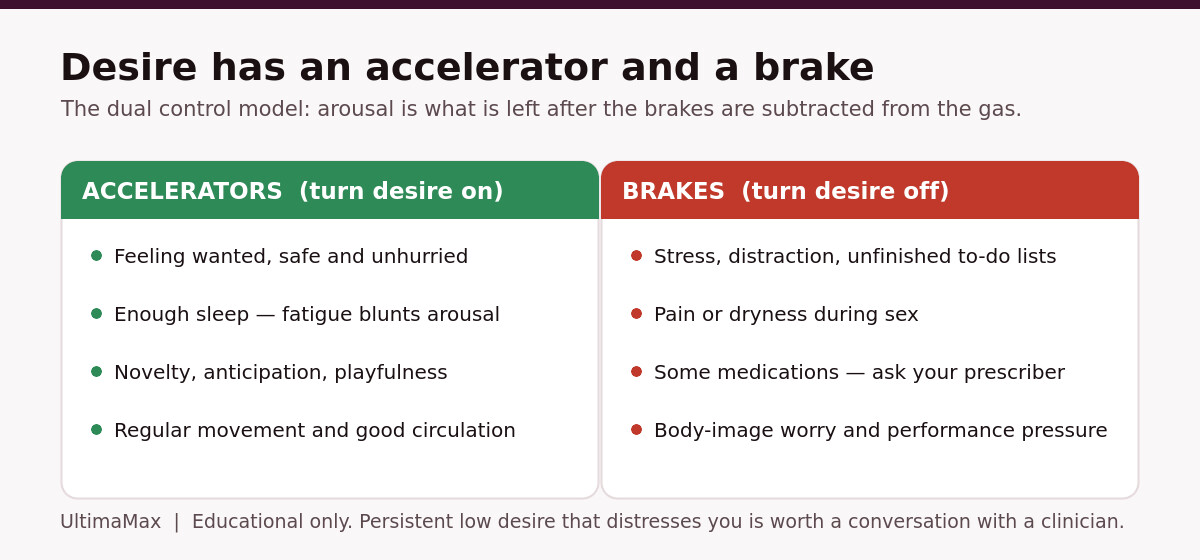
This reframing changes what you go shopping for. If the brake is what is stuck, buying something to press the accelerator harder is the wrong intervention. The list of common brakes is unromantic and specific:
| Brake | Why it shuts desire down | What tends to help |
|---|---|---|
| Chronic stress and mental load | The nervous system prioritises threat and logistics over reproduction | Protected time, actual downtime, redistributing the invisible workload |
| Sleep debt | Fatigue blunts arousal and lowers sex hormone levels | Sleep is not a lifestyle nicety here; it is a direct input |
| Pain or dryness during sex | The body learns to anticipate discomfort and pre-emptively withdraws | Fix comfort first — lubricant, moisturiser, or a clinical work-up |
| Medication | SSRIs, some hormonal contraceptives and beta-blockers commonly affect desire and orgasm | Never stop a prescription on your own — ask about alternatives |
| Body-image worry | Self-monitoring during sex fragments attention and blocks arousal | Sensate focus, dim light, whatever gets attention back into the body |
| Hormonal transitions | Postpartum, breastfeeding and perimenopause all shift the baseline | Time, information, and a clinician who takes it seriously |
| Unspoken resentment | The brake is exquisitely sensitive to feeling unseen or unfairly treated | The conversation you have been avoiding |
Fix comfort before you fix desire
If penetration is uncomfortable, that is the first domino. Pain teaches the brake to engage before anything has started, and no amount of accelerator overcomes it. Vaginal dryness is common, extremely treatable, and has nothing to do with how attracted you are to your partner — hormonal contraceptives, antihistamines, breastfeeding, stress and perimenopause all reduce natural lubrication.
The American College of Obstetricians and Gynecologists recommends over-the-counter lubricants and vaginal moisturisers as the first step, favouring water-based lubricants over oil. The Office on Women's Health adds that untreated dryness can cause small tears that raise infection risk — a good reason to treat it rather than push through.
Practically: keep a decent water-based lubricant within arm's reach and use more of it than feels necessary. Our companion guide, how to choose a personal lubricant, covers the osmolality and pH numbers worth knowing, or you can browse the water-based lubricant range directly.
Do topical arousal gels work?
Topical arousal gels work on sensation, not desire. Most use a mild vasodilator or a cooling or warming agent — menthol, peppermint oil, capsaicin — applied to the clitoris and surrounding tissue to increase local blood flow and nerve sensitivity. That is a real, physical, immediate effect. It is not a treatment for low libido, and no honest product claims otherwise.
Used with realistic expectations, they are one of the more sensible categories in this market. The effect is local, it starts within minutes, it is dose-controllable, and nothing is being swallowed. If low sensation rather than low interest is the sticking point — which is common after childbirth, on SSRIs, or during perimenopause — a topical gel targets the actual complaint.
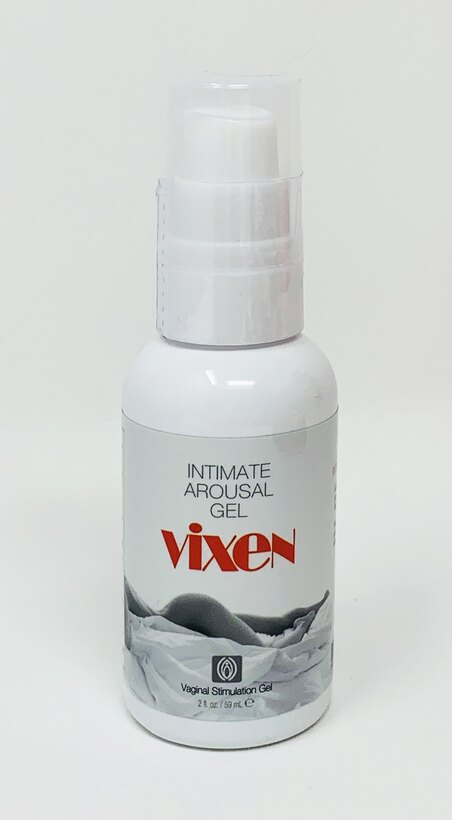
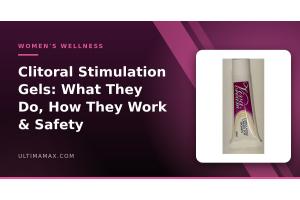
Vixen Intimate Arousal Vaginal Stimulation Gel, 2 fl oz
A five-ingredient topical: water, glycerin, propylene glycol, peppermint oil and sodium carbomer. Applied to the underside of the clitoris and massaged in until sensitivity increases. Simple formula, no hormones, reapply as desired.
View productPatch-test anything with a sensation agent. Menthol, peppermint oil and capsaicin produce a tingle for some people and a genuine burn for others, and mucous membrane is far less forgiving than forearm skin. Apply a small amount to the inner thigh first and wait. If a gel stings, wash it off with mild soap and water — plain water can spread an oil-based irritant rather than remove it. Stop using any product that causes irritation lasting more than a few hours.
A note on hormone-containing topicals
Some "libido support" creams contain DHEA, a hormone precursor. On Libido is one example — its ingredient list includes DHEA alongside botanicals such as maca, tribulus and epimedium, applied to the chest, abdomen or inner thighs rather than internally. Vaginal DHEA is a real clinical tool; there is an FDA-approved prescription version for painful intercourse after menopause. But a hormone precursor in an over-the-counter cosmetic is a different proposition from a prescription with a known dose. If you have a history of hormone-sensitive cancer, are pregnant or breastfeeding, or take any hormonal medication, raise it with your clinician before using a DHEA-containing product. Compare the wider arousal gels and creams range if you would rather stay hormone-free.
What about herbal libido supplements?
The evidence is thin and mixed. Korean red ginseng has some supportive data for menopause-related sexual symptoms, and one small trial found a benefit for maca in postmenopausal women. Neither is a reliable effect, and neither is close to the certainty implied by the packaging. More importantly, this product category has a serious adulteration problem.
The National Center for Complementary and Integrative Health's fact sheet on Asian ginseng is a useful reality check on how modest and uncertain the evidence really is for the botanicals in this space. Two further points are worth knowing before you spend money:
1. "Proprietary blend" means you cannot check the dose
When a label lists fifteen botanicals inside a single 750 mg "proprietary blend," you have no idea how much of any one of them you are taking. If a trial found a benefit at 4 grams of maca per day, a blend that might contain 40 mg of it tells you nothing. The NIH Office of Dietary Supplements consumer fact sheet explains what supplement labels are and are not required to disclose — worth ten minutes of anyone's time.
2. Some ingredients have real interactions
"Natural" is not a synonym for inert. Licorice root, a common blend ingredient, contains glycyrrhizin, which the NCCIH licorice root fact sheet notes can raise blood pressure, lower potassium and cause irregular heart rhythm at high or prolonged doses. Ginseng can interact with blood thinners and diabetes medication. If you take any prescription, run the ingredient list past a pharmacist.
The adulteration problem is not theoretical. The FDA maintains an ongoing list of sexual enhancement product notifications for items found by laboratory analysis to contain undeclared prescription drugs — most often sildenafil (the active ingredient in Viagra) or tadalafil (Cialis). These appear in capsules, liquid shots, honey sachets, gummies and chocolates marketed as all-natural. Undeclared sildenafil can interact with nitrate medication and drop blood pressure dangerously. Before you buy any ingested enhancement product — from us or anyone else — search it in the FDA Health Fraud Product Database. It takes thirty seconds.
What actually helps, ranked by evidence
| Intervention | How strong is the evidence | Effort |
|---|---|---|
| Treating pain or dryness (lubricant, moisturiser, vaginal oestrogen) | Strong | Low |
| Sleep and stress load | Strong, if unglamorous | High, and worth it |
| Reviewing medications with a prescriber | Strong | One appointment |
| Sex therapy / mindfulness-based approaches | Good | Moderate |
| Regular physical activity | Good, general circulation and mood | Moderate |
| Topical arousal gels (for sensation) | Mechanistically sound, immediate, local | Very low |
| Vibrators and toys | Good for reliable arousal and orgasm | Very low |
| Herbal libido supplements | Weak and inconsistent | Low cost, real adulteration risk |
Nothing on that list is exotic. That is rather the point — the interventions with the best evidence are the ones nobody can package and sell you at a markup.
When to see a clinician
Low desire becomes a clinical matter when it persists and it bothers you — not when it fails to match someone else's expectation. Bring it up if desire has dropped noticeably and stayed down for six months or more, if sex is painful, if you cannot reach orgasm when you used to, if it started after beginning a new medication, or if it is causing you distress.
MedlinePlus on women and sexual problems is a good plain-language primer to read beforehand, and the National Institute on Aging's guidance on sexuality and intimacy covers the changes that come with age without treating them as an ending. If a clinician brushes you off — and it happens — ask for a referral to a gynecologist or a certified sex therapist. This is a legitimate medical concern with legitimate treatments.
Frequently asked questions
Is it normal to have no sex drive?
Low or absent spontaneous desire is very common, particularly in long relationships, during stress, postpartum and around perimenopause. Many women have responsive rather than spontaneous desire — wanting arrives after arousal starts. It becomes worth investigating when it persists and causes you distress.
Do female libido supplements actually work?
The evidence is weak and inconsistent. Korean red ginseng has some support for menopause-related sexual symptoms and one small trial favoured maca in postmenopausal women, but neither is a reliable effect. Proprietary blends also hide individual doses, and the FDA regularly finds undeclared prescription drugs in this category.
What is the difference between an arousal gel and a lubricant?
A lubricant reduces friction. An arousal gel adds sensation — usually via a warming, cooling or mildly vasodilating ingredient applied to the clitoris. They do different jobs and are often used together; most arousal gels are not sufficiently slippery to work as lubricant.
Can antidepressants cause low libido?
Yes. SSRIs commonly reduce desire and delay or block orgasm. Never stop or change a prescription on your own — talk to your prescriber, because dose adjustments, timing changes and alternative medications are all options.
Does menopause end your sex life?
No. Falling oestrogen changes lubrication and tissue elasticity, and those changes are treatable with moisturisers, lubricants and, where appropriate, low-dose vaginal oestrogen. Many people report their sex lives improving after menopause once contraception and periods are off the table.
How long should I try something before deciding it is not working?
Topical arousal gels are immediate — you will know within one session. Lubricants and moisturisers show benefit within a couple of weeks. Sleep, stress and relationship changes take one to three months. Anything sold as a supplement that promises a dramatic overnight change is describing a drug effect, not a botanical one.
Are "female Viagra" pills and shots safe?
Over-the-counter products marketed that way are not regulated as drugs and are not tested before sale. The FDA has issued repeated public notifications about sexual enhancement products — including capsules, liquid shots, honey sachets and chocolates — found to contain undeclared sildenafil or tadalafil, which can dangerously lower blood pressure in people taking nitrates. Check any product in the FDA Health Fraud Product Database before use, and talk to a clinician about genuine prescription options.
Sources and further reading
- ACOG — Experiencing Vaginal Dryness? Here's What You Need to Know
- Office on Women's Health — Menopause symptoms and relief
- MedlinePlus — Women and sexual problems
- National Institute on Aging — Sexuality and Intimacy in Older Adults
- NCCIH — Asian Ginseng: Usefulness and Safety
- NCCIH — Licorice Root: Usefulness and Safety
- NIH Office of Dietary Supplements — Dietary Supplements: What You Need to Know
- FDA — Sexual Enhancement and Energy Product Notifications
- FDA — Health Fraud Product Database
Medical disclaimer. This article is educational and is not medical advice. It does not diagnose, treat, cure or prevent any disease. Statements about dietary supplements have not been evaluated by the U.S. Food and Drug Administration. If you have persistent low desire, pain during sex, or a new symptom that concerns you, please speak with a qualified healthcare professional.